Use Breathing Mode Before Checks for Cleaner Baselines
5 min read • Published February 23, 2026 • Updated September 22, 2026
By the Blood Pressure Editorial Team · Sources listed below · Editorial policy
Key takeaways
- Rushing into a measurement can make conditions harder to compare.
- Standard home-monitoring guidance calls for at least five minutes of quiet rest before a cuff reading, without talking or using the phone.
- If slow breathing helps you settle during that rest period, use a comfortable pace without forcing or holding your breath.
- Evidence suggests relaxation techniques may have modest short-term effects, but study quality varies.
Detailed guide
Rushing into a measurement can make conditions harder to compare. Standard home-monitoring guidance calls for at least five minutes of quiet rest before a cuff reading, without talking or using the phone.
If slow breathing helps you settle during that rest period, use a comfortable pace without forcing or holding your breath. Evidence suggests relaxation techniques may have modest short-term effects, but study quality varies.
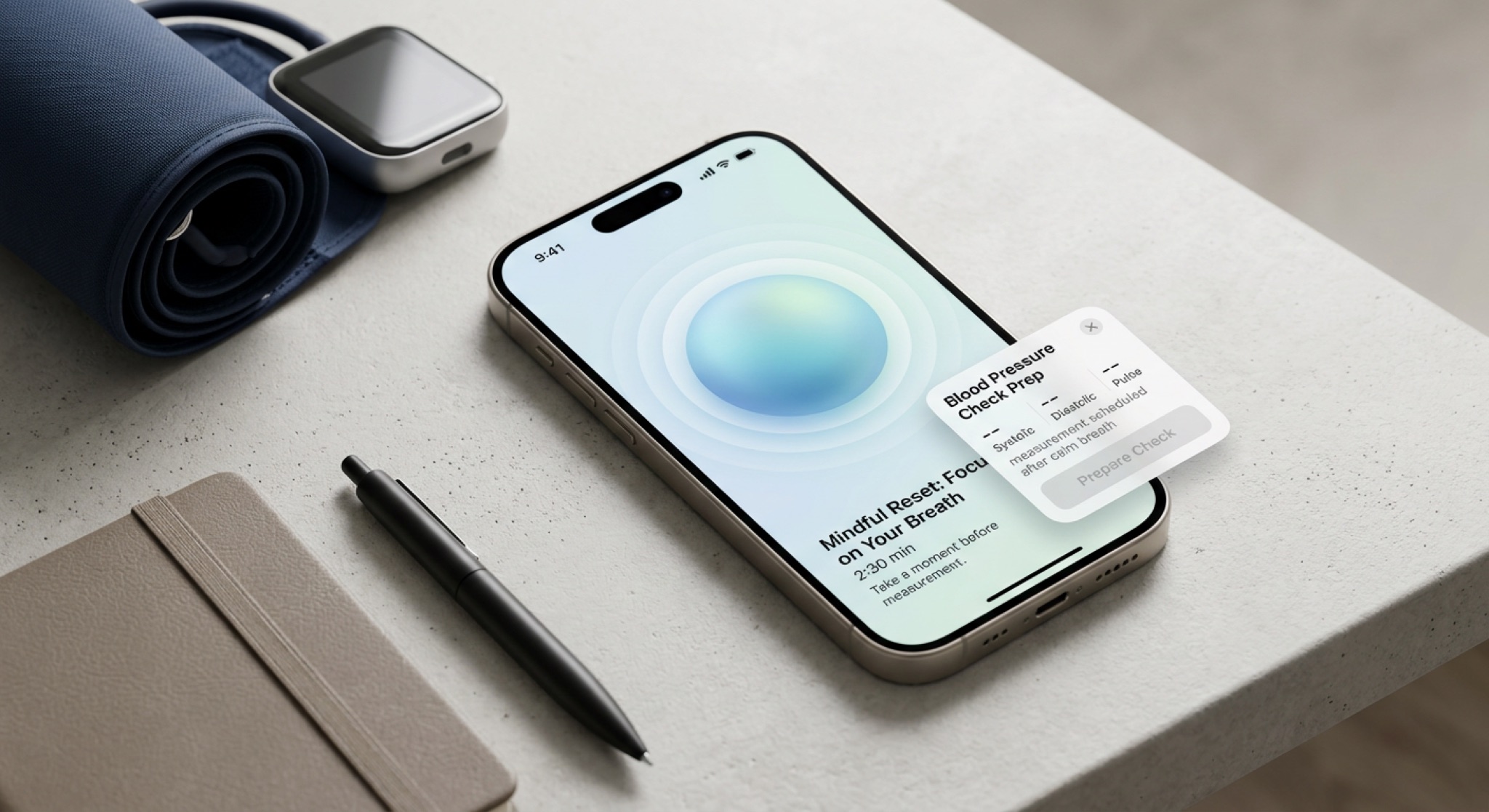
In the app, breathing mode can serve as a repeatable cue before you log BP or pulse. Keep the cuff setup, posture, and timing consistent as well; breathing does not correct an inaccurate cuff or poor position.
Do not use breathing exercises instead of prescribed treatment or timely medical care. Follow your healthcare professional's measurement and treatment plan first.
Why this matters
- Stress spikes can temporarily affect pulse and blood-pressure readings without changing long-term baseline.
- A short relaxation exercise can create a calmer pre-check routine, but evidence for blood-pressure effects is modest and does not replace treatment.
7-day routine to try
- 1.Before each check, do a 2-4 minute guided breathing reset.
- 2.Add context tags for workload, sleep loss, conflict, travel, and caffeine timing.
- 3.Compare recovery readings later in the day under calmer conditions.
- 4.Use weekly trend cards to separate transient stress events from persistent drift.
Common pitfalls to avoid
- Reacting to one stress-driven spike without waiting for a repeat under stable conditions.
- Skipping context notes, which makes later interpretation weaker.
- Using wellness scores as a replacement for clinical evaluation.
Trusted references
Sources used for the claims and safety boundaries on this page. A source list does not mean the article has been medically reviewed.
-
Relaxation techniques: evidence and limitations
NCCIH
-
Stress and your body
MedlinePlus
-
Home blood pressure monitoring
American Heart Association