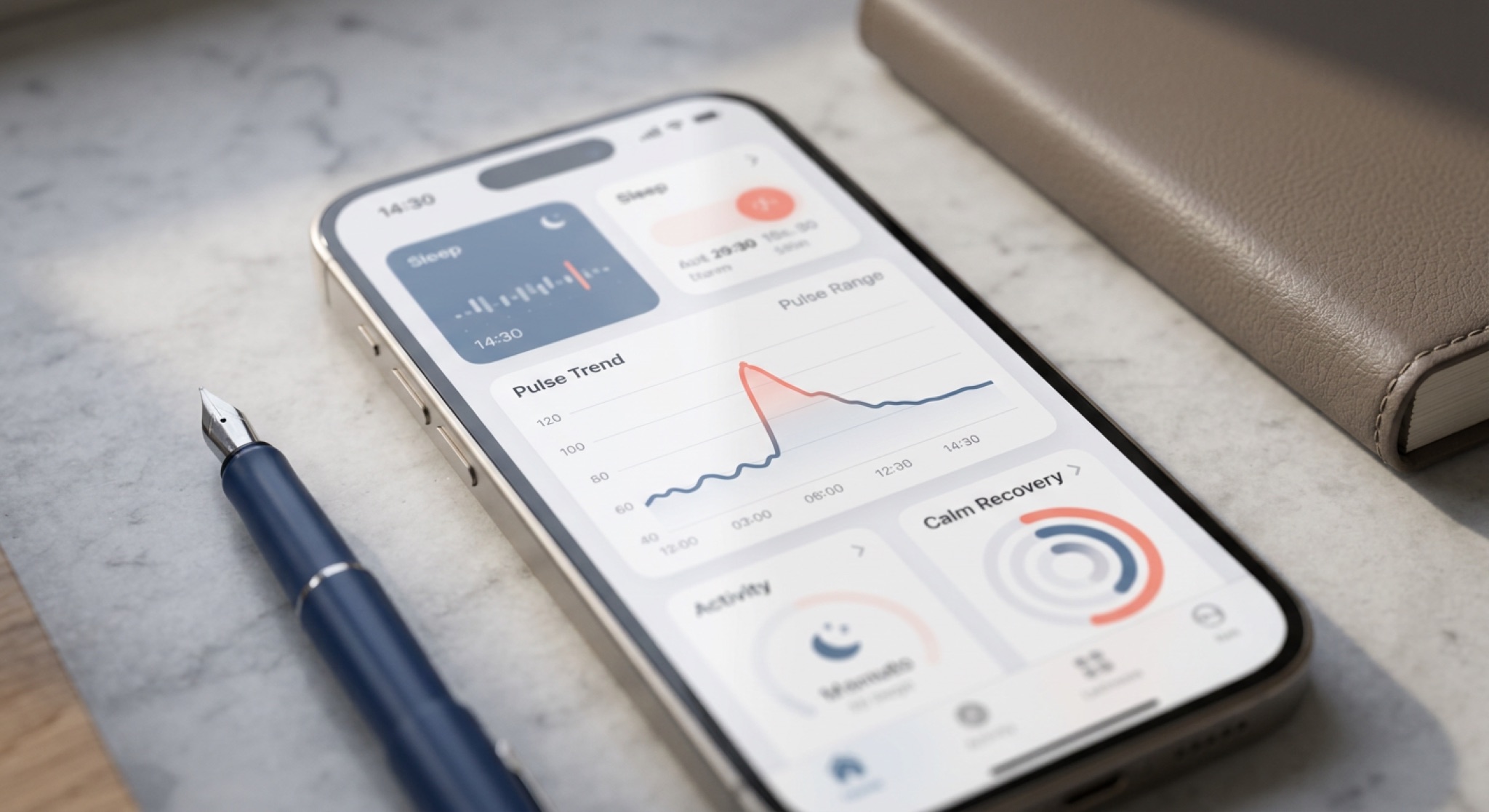
Stress Spikes: How to Read Pulse Context Without Panic
6 min read • Published February 22, 2026
By the Blood Pressure Editorial Team · Sources listed below · Editorial policy
Key takeaways
- Short-term stress can elevate pulse and influence blood pressure checks.
- This does not always mean your long-term baseline changed.
- The key is identifying whether values recover under similar calmer conditions.
- When you see a spike, add context immediately: sleep debt, conflict, heavy workload, illness, travel, or caffeine timing.
Detailed guide
Short-term stress can elevate pulse and influence blood pressure checks. This does not always mean your long-term baseline changed. The key is identifying whether values recover under similar calmer conditions.
When you see a spike, add context immediately: sleep debt, conflict, heavy workload, illness, travel, or caffeine timing. Context transforms isolated numbers into actionable information.
Review how quickly values return to your typical range during later checks. Recovery behavior is often more informative than the spike itself.
Use trend cards for weekly interpretation and avoid instant conclusions from one stressful moment.
Why this matters
- Stress spikes can temporarily affect pulse and blood-pressure readings without changing long-term baseline.
- A short relaxation exercise can create a calmer pre-check routine, but evidence for blood-pressure effects is modest and does not replace treatment.
7-day routine to try
- 1.Before each check, do a 2-4 minute guided breathing reset.
- 2.Add context tags for workload, sleep loss, conflict, travel, and caffeine timing.
- 3.Compare recovery readings later in the day under calmer conditions.
- 4.Use weekly trend cards to separate transient stress events from persistent drift.
Common pitfalls to avoid
- Reacting to one stress-driven spike without waiting for a repeat under stable conditions.
- Skipping context notes, which makes later interpretation weaker.
- Using wellness scores as a replacement for clinical evaluation.
Trusted references
Sources used for the claims and safety boundaries on this page. A source list does not mean the article has been medically reviewed.
-
Relaxation techniques: evidence and limitations
NCCIH
-
Stress and your body
MedlinePlus
-
Home blood pressure monitoring
American Heart Association