How Hydration Tracking Supports Measurement Consistency
5 min read • Published February 21, 2026 • Updated September 22, 2026
By the Blood Pressure Editorial Team · Sources listed below · Editorial policy
Key takeaways
- A hydration log records one part of your daily routine; it does not measure blood pressure or explain an elevated reading by itself.
- Dehydration can cause symptoms such as thirst, fatigue, or dizziness, and severe symptoms need medical attention.
- The app water tracker can help you remember what you drank during long workdays.
- Treat the record as personal context rather than evidence that more water will lower a particular blood-pressure value.
Detailed guide
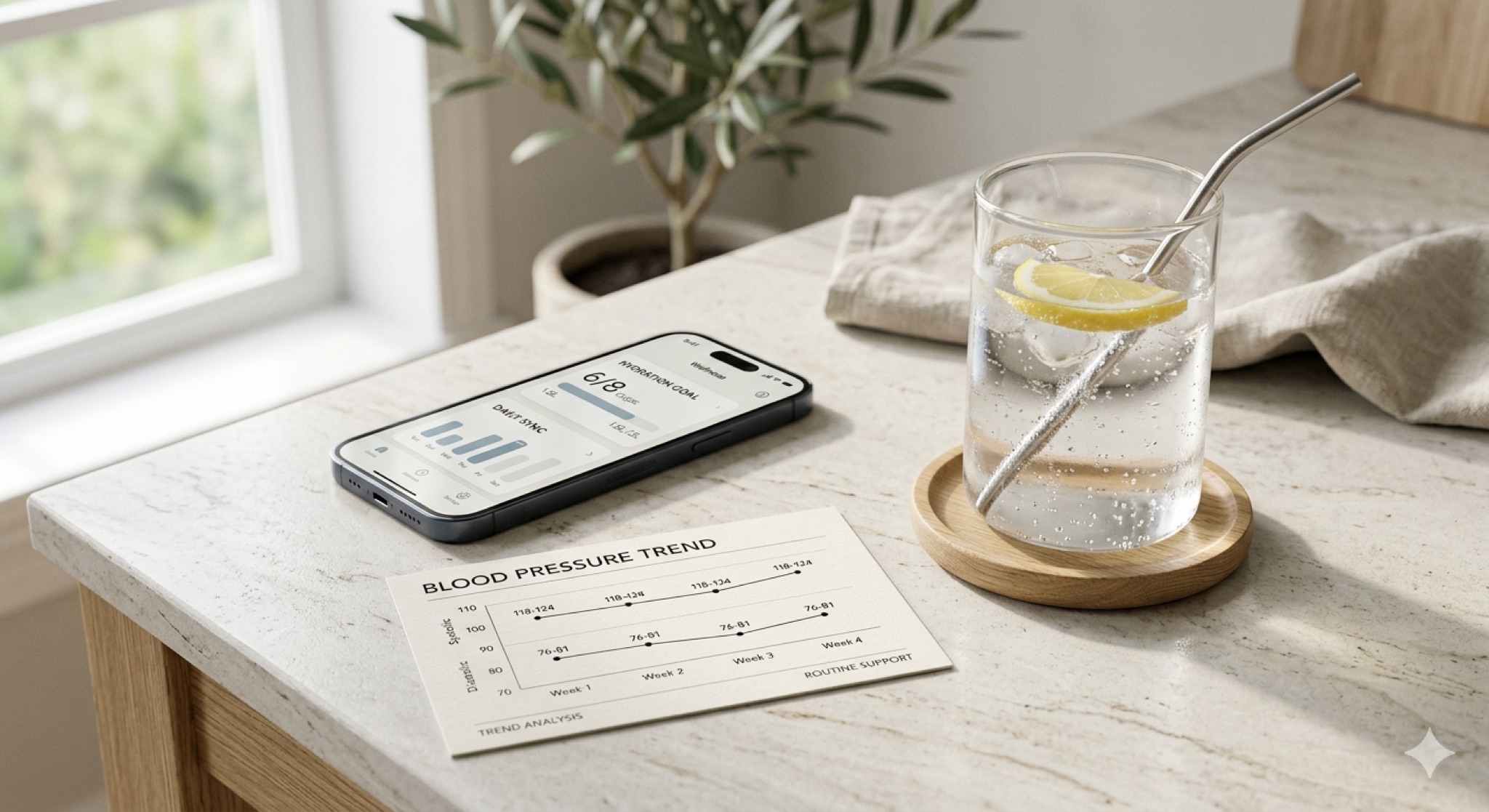
A hydration log records one part of your daily routine; it does not measure blood pressure or explain an elevated reading by itself. Dehydration can cause symptoms such as thirst, fatigue, or dizziness, and severe symptoms need medical attention.
The app water tracker can help you remember what you drank during long workdays. Treat the record as personal context rather than evidence that more water will lower a particular blood-pressure value.
Compare cuff readings only when measurement conditions are similar. Posture, cuff fit, rest time, caffeine, smoking, exercise, medication, and illness may all matter and should not be reduced to a hydration score.
If you have heart, kidney, or other conditions that affect fluid intake, follow your clinician's advice instead of a generic water target.
Why this matters
- Daily cardiovascular data becomes useful only when measurement conditions are consistent across days.
- Single readings can be noisy; week-level patterns are usually more useful for personal decisions and clinician conversations.
7-day routine to try
- 1.Pick two stable time windows and keep posture/cuff setup identical each day.
- 2.Log context tags for sleep, stress, caffeine, exercise, and illness when relevant.
- 3.Review trend direction at the end of the week, not after each single spike.
- 4.If elevated values persist, prepare your log summary and discuss it with a qualified clinician.
Common pitfalls to avoid
- Changing measurement setup every day and expecting clean trend comparisons.
- Repeating checks too many times in a stress loop instead of using a clear re-check rule.
- Treating app data as diagnosis rather than wellness context.
Trusted references
Sources used for the claims and safety boundaries on this page. A source list does not mean the article has been medically reviewed.
-
Dehydration overview
MedlinePlus
-
Home blood pressure monitoring
American Heart Association