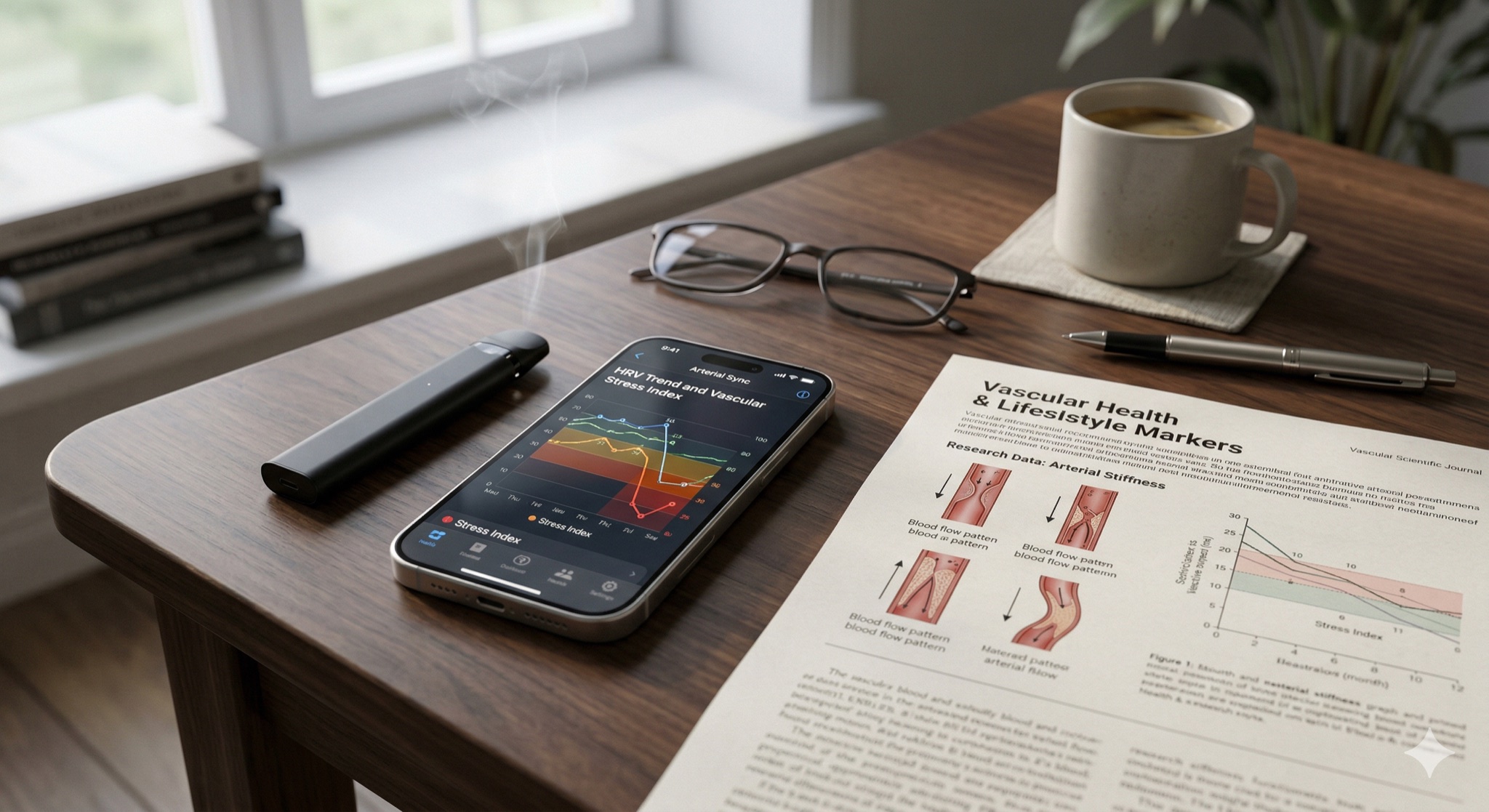
Smoking, Vaping, and Vascular Stress Signals
6 min read • Published February 15, 2026
By the Blood Pressure Editorial Team · Sources listed below · Editorial policy
Key takeaways
- Nicotine and smoking-related exposure can affect vascular tone and cardiovascular risk.
- Even when day-to-day numbers vary, repeated exposure patterns matter for long-term heart health.
- If you are reducing or quitting, track milestones in the app alongside BP and pulse trends.
- Visible progress can reinforce behavior change and improve clinical conversations.
Detailed guide
Nicotine and smoking-related exposure can affect vascular tone and cardiovascular risk. Even when day-to-day numbers vary, repeated exposure patterns matter for long-term heart health.
If you are reducing or quitting, track milestones in the app alongside BP and pulse trends. Visible progress can reinforce behavior change and improve clinical conversations.
Use measurements as feedback, not punishment. The combination of trend tracking and gradual habit change is usually more effective than all-or-nothing attempts.
For cessation support, work with medical professionals and evidence-based quit resources. Structured support significantly improves outcomes.
Why this matters
- Physical activity, weight trajectory, alcohol, and tobacco exposure influence cardiovascular risk over time.
- Small repeatable lifestyle decisions can compound into measurable trend improvement.
7-day routine to try
- 1.Plan realistic activity targets and log completion rather than aiming for perfection.
- 2.Capture potential disruptors like travel, jet lag, and schedule shifts with context notes.
- 3.Limit high-risk habits and track how recovery windows affect your readings.
- 4.Use weekly reflection to adjust one behavior at a time for better adherence.
Common pitfalls to avoid
- Setting aggressive behavior goals that are unsustainable after a few days.
- Ignoring sleep and recovery while focusing only on daytime actions.
- Skipping follow-up when risk indicators remain elevated across multiple weeks.
Trusted references
Sources used for the claims and safety boundaries on this page. A source list does not mean the article has been medically reviewed.